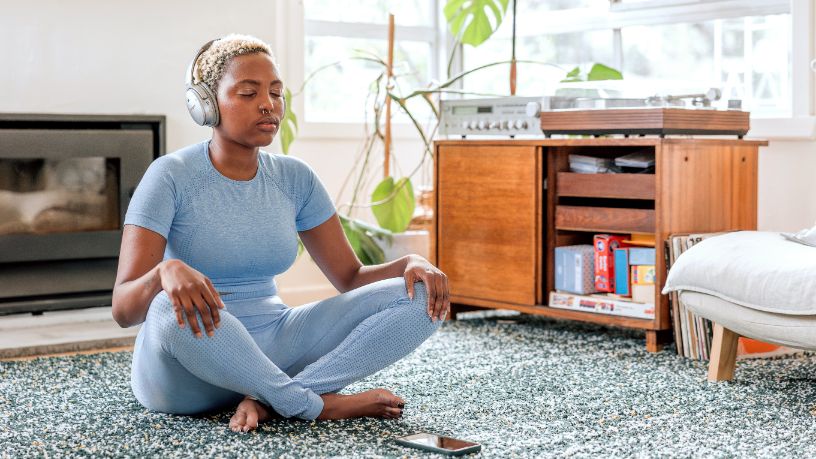
Many Australians experience sleep problems, including poor quality sleep and sleep conditions such as insomnia.
By Dinethra Menon Writer

By Dinethra Menon Writer
Many Australians experience sleep problems, including poor quality sleep and sleep conditions such as insomnia.
Lack of good quality sleep can have serious health repercussions.
Bedtime meditations can help relax the mind and body and prepare you for a good night’s rest.
There’s nothing worse than tossing and turning for hours when trying to get to sleep. The more you try to get comfy and drop off, the less you feel like it’s going to happen. This can lead to frustration and fatigue during the night and the next day.
If you struggle to fall asleep at night, you’re not alone.
More than 60% of Australian adults report at least one type of sleeping problem, which can include trouble falling or staying asleep, or a sleep condition such insomnia or sleep apnoea.1
This is an issue because quality sleep is a crucial part of maintaining good health, and poor sleep, or a lack of it, is a contributing factor for some serious health conditions, including heart disease, type 2 diabetes and stroke.1
While there are a lot of things you can do to try to improve your sleep habits, including creating a comfortable sleeping environment and staying away from alcohol and digital devices in the hours before bed, nightly bedtime meditations can also help.Bedtime meditations are exercises that help to relax the mind and body to aid restful sleep.
Ranging from breathing techniques to guided meditations, bedtime mindfulness can be part of your nighttime routine to prepare your brain and body for rest.
Studies show that mindfulness techniques are more effective than sleep education and can help reduce insomnia, fatigue and even symptoms of depression.2
Like other forms of mindfulness that can vary from a quiet walk in nature to a deep, meditative state of relaxation, bedtime meditations can be self-guided with a deep breathing exercise, or more formal when you follow a recorded mindfulness exercise.
Whatever your preference, your bedtime meditations should leave you feeling calm, relaxed and ready to fall asleep in a happy state.
Try this Bupa guided meditation for restful sleep.
Created by neuroscientist Dr Andrew Huberman, Non-Sleep Deep Rest (NSDR) combines elements of meditation and deep breathing techniques to create a feeling of total relaxation without actually falling asleep.
Meant to rejuvenate your energy in the same way that sleep does, NSDR has grown in popularity in recent years.
Studies show that as well as reducing symptoms of stress, anxiety and pain, and boosting immunity, NSDR can help alleviate sleep issues including insomnia and improve overall sleep quality.3
Try one of these simple bedtime meditations tonight.
Get in a comfortable meditation position. This can be lying in bed with your eyes open or sitting comfortably in a quiet space.
Spend a few minutes doing one of these exercises. Each night you can build up the time to whatever you find most helpful and relaxing.
If you find it difficult to focus or your mind keeps wandering, be patient and just bring your mind back to your exercise. With time, meditation will likely become easier and more natural.
Find free guided bedtime meditations at:
Dinethra Menon Writer
Dinethra Menon is a freelance health and medical writer based in Sydney.
At Bupa, trust is everything
Our health and wellbeing information is regularly reviewed and maintained by a team of healthcare experts, to ensure its relevancy and accuracy. Everyone's health journey is unique and health outcomes vary from person to person.
This content is not a replacement for personalised and specific medical, healthcare, or other professional advice. If you have concerns about your health, see your doctor or other health professional.
1Australian Institute of Health and Wellbeing. (2021). Sleep problems as a risk factor for chronic conditions. Australian Government.
2Corliss, J. (2020). Mindfulness meditation helps fight insomnia, improves sleep. Harvard Medical School.
3Neuhaus, M. (2024). Non-Sleep Deep Rest (NSDR): Exploring a world beyond sleep. Positive Psychology.
In a world that’s obsessed with pace and productivity, rest and sleep are often treated as luxuries and are often not prioritised in the way they should be.
Small changes to your evening routine could have you falling asleep faster and sleeping better.
It can be hard to find time to relax when you’re busy living the nine-to-five. But 10 minutes can go a long way. Relax every day with these 7 tips.
Mornings are important, and the way you start your day can impact how it goes. Discover 8 helpful tips for starting things on the right foot.