
By Blua Digital health by Bupa
On this page
Key takeaways
- Blood glucose monitoring shows your level at a point in time, while HbA1c shows your average over 2 to 3 months.
- HbA1c is used to help diagnose type 2 diabetes and monitor long-term blood glucose management.
- Monitoring blood glucose levels helps you understand how food, activity, stress and medication affect your blood glucose, so you can make informed day-to-day decisions.
If you’re living with diabetes, there are 2 main ways to understand your blood glucose, each for a different purpose.
Day-to-day monitoring shows what’s happening right now, so you can respond in the moment. HbA1c shows your average levels over the past 2 to 3 months, giving a clearer picture of how things are tracking over time.
Blood glucose levels and diabetes
Blood glucose levels can rise and fall more often in diabetes because the body doesn’t regulate glucose in the same way. This depends on the type of diabetes and how insulin is produced or used in the body.
Blood glucose monitoring at home
Blood glucose monitoring at home helps you understand how your levels are changing day to day. It can show how your body responds to food, activity, medication, illness and stress1, helping you notice patterns over time, including high and low blood glucose levels (hyperglycaemia and hypoglycaemia).
If you’re living with diabetes, you might be using a fingerprick blood glucose test or a continuous glucose monitor (CGM) to check your levels.
A fingerprick test uses a small drop of blood placed onto a glucose meter to show your blood glucose level at that time.
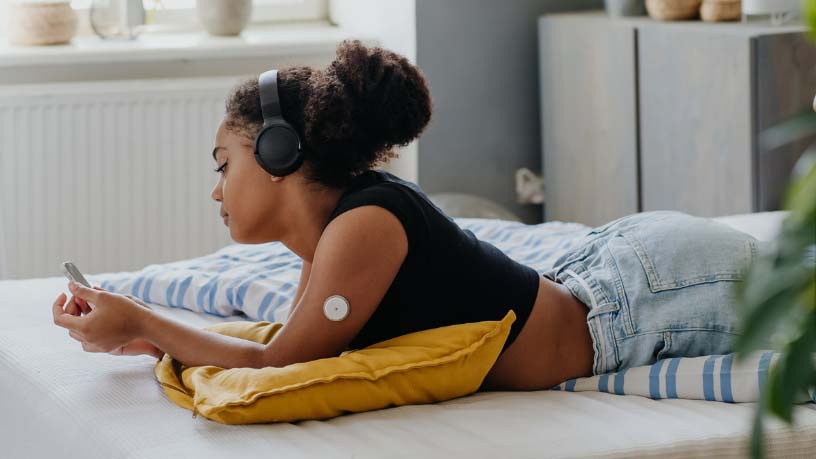
A CGM uses a small sensor worn on your skin that measures glucose in the fluid just under the skin throughout the day and night, giving continuous readings and showing how your levels change over time.
How often you check your blood glucose depends on the type of diabetes you have, your treatment plan and the tools you use. Your healthcare team will advise on how often to check and what levels are appropriate for your individual situation, but generally:
- Type 1 diabetes: frequent daily monitoring (multiple times per day)1
- Type 2 diabetes: varies widely based on treatment1
- Prediabetes: usually no routine home testing2
- Gestational diabetes: structured daily testing (often 4 times per day)3
While blood glucose monitoring is important for day-to-day management, other tests can provide a broader picture of your overall health.
What is an HbA1c blood test?
The HbA1c is a blood test that shows your average blood glucose level over the past 2 to 3 months, including how elevated it may have been.4
This can help show how well your blood glucose levels have been managed over time and whether any changes to your care may be needed.
As well as being used to help manage diagnosed type 1 and type 2 diabetes, the blood test can also help to diagnose type 2 diabetes and prediabetes.4
In pregnancy, HbA1c is not typically used to diagnose gestational diabetes, but it may be used in higher-risk situations based on clinical advice.
The blood test is done at a pathology centre or healthcare clinic. You do not need to prepare for a HbA1c test, but you do need a referral from your GP.
How often should I have a HbA1c blood test?
Effective diabetes management relies on both HbA1c testing and blood glucose monitoring.
Your doctor or specialist will advise you when you need an HbA1c blood test5, as well as your individual target level.
As a general guide:
- Type 1 diabetes: every 3 to 6 months
- Type 2 diabetes: every 6 to 12 months
- Prediabetes: based on doctor’s advice, usually once every 12 months 6
- Gestational diabetes: Once or twice during the pregnancy, as recommended by your treating team. 3
Your doctor might suggest more frequent testing depending on your situation. You might need more frequent checks if you’ve recently changed your diabetes medications or if you have not reached your target HbA1c level. It’s best to follow their advice on what’s right for you.
Together, HbA1c and blood glucose monitoring give you both the daily detail and the longer-term picture needed to manage your diabetes with confidence.
Need some support?
Call us on 1300 030 238 (Mon-Fri, 9am-5pm AEST) to speak with one of our health professionals or register for a call back to find out what programs are available to you.
Blua Digital health by Bupa
Blua is Bupa’s new home for digital health services like online doctor appointments and delivery of prescription items and over-the-counter goods.
At Bupa, trust is everything
Our health and wellbeing information is regularly reviewed and maintained by a team of healthcare experts, to ensure its relevancy and accuracy. Everyone's health journey is unique and health outcomes vary from person to person.
This content is not a replacement for personalised and specific medical, healthcare, or other professional advice. If you have concerns about your health, see your doctor or other health professional.
1 Diabetes Australia. (2026). Blood glucose monitoring.
2 Healthdirect. (2025). Pre-diabetes.3 Health Direct. (2025). Gestational diabetes.
4 Health Direct. (2025). HbA1c test.
5 NDSS. (2025). HbA1c checks.6 Health Direct. (2024). Type 2 diabetes.
You might also like

What you shouldn't say to someone with type 2 diabetes
If someone you love has been diagnosed with type 2 diabetes, it can help to know what to say (and what to not say) to them.

Diabetes: 6 steps to healthier eating
Use these simple strategies to ensure you’re choosing the right foods to manage your diabetes.

5 tips to help monitor your blood glucose levels
Testing your blood glucose levels can be one of the more tiring parts of diabetes management. But with a few tweaks, it can be easy.