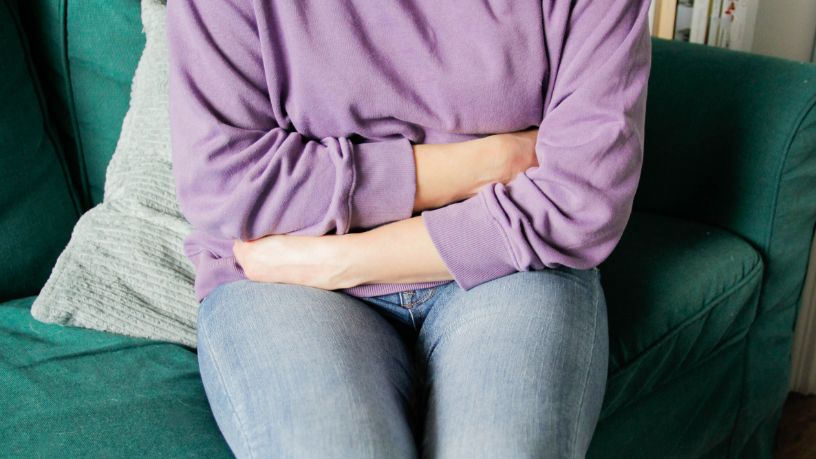
One in 5 Australians will experience irritable bowel syndrome (IBS) in their lives.
By Jenny Boss Health writer

By Jenny Boss Health writer
One in 5 Australians will experience irritable bowel syndrome (IBS) in their lives.
IBS symptoms range from diarrhoea to abdominal bloating.
Different things trigger IBS for different people. Find out what to do if you experience symptoms.
Irritable bowel syndrome (IBS) is a condition that causes recurring pain or discomfort in the abdomen and may result in ongoing gastrointestinal issues.
If you’re living with IBS, you’re not alone. The condition is very common, with about one in 5 Australians experiencing symptoms at some point in their lives.1
IBS often starts in early adulthood and is more common among women and people assigned female at birth than men and people assigned male at birth.2 The condition typically causes abdominal pain, bloating, constipation or diarrhoea.
IBS is a ‘functional bowel disorder’, meaning that although there’s a change in how your gut functions, there’s no obvious structural change when it’s examined.
It’s easy to confuse with IBS with inflammatory bowel disease (IBD), a different family of conditions that covers Crohn’s disease and ulcerative colitis.
IBS is a chronic and often unpredictable condition. Symptoms can range from mild to severe, and for some the condition seriously affects their quality of life.
Symptoms can be painful and can change over time. Some of the most common ones include:
Abdominal pain or discomfort, such as stomach cramps combined with a change in bowel habits, can range from mild to severe for people with IBS.
The pain is often described as sharp, dull, crampy, gas-like or a generalised ache. It may improve or be made worse by passing stool or wind, and it’s often made worse by eating.
Many people with IBS report feeling pain at certain times of the day, such as the evening. For some people, pain often occurs alongside menstrual cycles.
Stool movements may vary in consistency, from hard and pellet-like (constipation) to loose and watery (diarrhoea). There is also a chance of passing small amounts of mucus.
At times, those with IBS may feel an urgent need to open their bowels. Afterwards, they may feel like their bowels haven't been completely emptied.
Often, one IBS symptom will recur more often than the others. Typically, this is either pain, constipation or chronic diarrhoea. But multiple symptoms can be experienced at once.
Stomach bloating is one of the most common IBS symptoms, with up to 90% of people with IBS experiencing it regularly.3
Bloating is common in both diarrhoea-dominant and constipation-dominant IBS, the 2 main types of the condition. Intestinal gas is also common, and often accompanies abdominal pain and cramping.
Further common symptoms of IBS include:
The exact causes of IBS are not clear, and the condition varies from person to person. There are several theories, though, ranging from psychological stress to gastroenteritis.
However, it’s likely that the condition results from one or more of the following:
In many IBS cases, emotional stress appears to make symptoms worse, whether it’s work anxieties, exams, relationship difficulties or grief.
While different for everyone, symptoms are also often exacerbated by certain ‘trigger’ foods and drinks, such as:
Hormones may play a role in IBS. Antibiotics and non-steroidal anti-inflammatory medicines (NSAIDs), such as ibuprofen and diclofenac, might also make symptoms worse.
Have you ever felt butterflies in your stomach? That’s a result of your ‘gut-brain axis’, the communication system connecting your digestive tract and your brain.
The relationship works both ways, meaning your brain communicates with your gut and your gut communicates with your brain. When this relationship is out of balance, your gut may become more sensitive than normal, and normal sensations, like digesting food, can be unpleasant or painful.
A number of factors can influence your gut-brain axis. But stress is considered a main one, and stressful events, long-lasting or recurring stress or early life trauma can all play a role.
Microbiota are the trillions of bacteria that live in your gut, which have important functions for your health, such as playing a role in IBS.
Research has found that people with IBS have changes in their gut microbiota that may influence the effects of IBS.4 Altering the bacteria in your gut with probiotics, therefore, may improve symptoms of IBS.
The symptoms mentioned above may point to another condition, such as coeliac disease, Crohn’s disease, ulcerative colitis or endometriosis. So, it’s always a good idea to see your GP to determine your cause.
After investigating your medical history, your GP may ask you about your symptoms, including:
Unfortunately, there's no test to definitely confirm IBS,5 but your GP may order different tests to eliminate other conditions, particularly if you have or experience:
If your GP thinks your IBS may be caused by an infection, they might request a stool sample or an X-ray of your abdomen.
There is no cure for IBS, but different treatments and lifestyle changes can help reduce the symptoms. If you’re experiencing any symptoms, talk to your GP.

Crohn’s & Colitis Australia provides information and support for people living with IBD. You can visit them online or call them on 1800 138 029
Jenny Boss Health writer
Jenny is a health writer and qualified nutritionist with a passion for debunking nutrition myths and making eating well accessible to everyone.
At Bupa, trust is everything
Our health and wellbeing information is regularly reviewed and maintained by a team of healthcare experts, to ensure its relevancy and accuracy. Everyone's health journey is unique and health outcomes vary from person to person.
This content is not a replacement for personalised and specific medical, healthcare, or other professional advice. If you have concerns about your health, see your doctor or other health professional.
1Better Health Channel. (2021). Irritable bowel syndrome (IBS). Victoria State Government, Department of Health.
2Kim, Y. S. & Kim, N. (2018). Sex-Gender Differences in Irritable Bowel Syndrome. Journal of Neurogastroenterology and Motility, 24(4), 544-558.
3Cleveland Clinic. (2021, October 9). Bloated stomach: Causes, tips to reduce & when to be concerned. Cleveland Clinic.
4Menees, S., & Chey, W. (2018). The gut microbiome and irritable bowel syndrome. F1000Res, 7:F1000 Faculty Rev-1029.
5Mayo Clinic. (2023). Irritable bowel syndrome. Mayo Clinic.
IBS can affect your life in a range of ways, and there’s no cure for the condition. So, it’s important to understand the best ways to manage it.
Your gut contains trillions of microorganisms known as a 'microbiome’. Find out how yours may be affecting your IBS or IBD.
Inflammatory bowel disease (IBD) is a serious chronic illness that can be managed with the right support.
Probiotic supplements claim to improve your gut health, but do they actually work? Find out if you should be taking them.