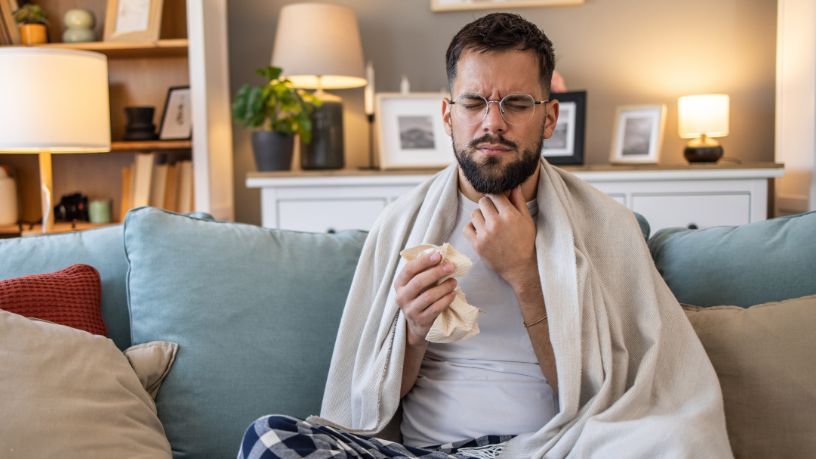
Acute sinusitis is usually caused by a viral infection, such as a cold, though some cases may become bacterial.
By Blua Digital health by Bupa

By Blua Digital health by Bupa
Acute sinusitis is usually caused by a viral infection, such as a cold, though some cases may become bacterial.
Most cases improve on their own within 1–2 weeks.
Simple home treatments can help relieve congestion and pressure, which can impact sleep, eating and concentration.
Cold and flu season is where sinusitis feels most at home.
Often triggered by a viral infection such as a cold, sinusitis occurs when the tissues lining the sinuses become inflamed, leading to congestion and symptoms that can sometimes feel worse than the original illness.
There are 2 distinct types of sinusitis, with different recovery times. Acute sinusitis typically lasts for up to 3 weeks, while chronic sinusitis lasts for several months or even longer. Chronic sinusitis is the more medically complex of the 2, but there are still things you can do at home that will help to relieve the symptoms in the short term.
Sinusitis is a fact of life for many, particularly during cold and flu season.
The sinuses are naturally lined with mucus. When the sinuses swell up and block during a cold, the mucus can't drain away as it normally would.
This creates conditions where mucus builds up, which can lead to inflammation and sometimes infection.
Sinusitis can also be triggered by allergies that similarly cause the mucus lining to become irritated.1 Chronic sinusitis is an inflammatory condition like asthma or psoriasis, which needs medical investigation and an ongoing management plan.
Sinusitis causes a blocked nose, often accompanied by facial pressure and/or pain. This makes it difficult to think, work, eat and sleep and can be incredibly frustrating. Other symptoms you might experience include loss of sense of smell or taste; bad breath; sore throat; tooth or jaw ache; postnasal drip in the back of the throat; and fever. People who suffer from persistent or recurring sinusitis are also at risk of developing depression and/or anxiety.
Sometimes, acute sinusitis will resolve itself without medical intervention.
A GP may consider antibiotics if symptoms are severe, last longer than around 10 days without improving, or get worse after you start to recover.
In the meantime, there are lots of things you can take or do at home to make symptoms more bearable.2
Bupa health insurance members can have prescriptions filled by local chemists and get them delivered to their door by registered couriers. You can also order over-the-counter goods. Delivery address must be within 8km of a participating pharmacy.
Over-the-counter (OTC) or behind-the-counter (as you'll have to ask the pharmacist) decongestant sprays can be the magic bullet for a stuffed-up nose, or at least a temporary one.
They work by narrowing the blood vessels in the nose, which reduces the swelling caused by sinusitis and opens up the nasal passages so you can breathe in clear, fresh air. Bliss.
However, it can be tempting to keep using them for more than the recommended 3 to 5 days. Overuse leads to 'rebound congestion', where your nose becomes sensitive to the spray and ends up even more blocked than it was before.
If your acute sinusitis is the result of a cold, it may well resolve itself after a couple of weeks. If your symptoms are severe, such as bad facial pain or fever, or if they last longer than 10 days without improving, or get worse after you start to recover, it’s worth speaking to a GP. Symptoms that continue for 12 weeks or more may be a sign of chronic sinusitis.
Access online doctors for simple medical health needs like requesting a prescription, asking for a medical certificate, or medical advice that may not need a physical consultation. Available to eligible Bupa members.
In an emergency, call 000.
The Australasian Society of Clinical Immunology and Allergy (ASCIA) offers information and support for Australians and New Zealanders living with allergies, providing medical practice, training, education and research.
Blua Digital health by Bupa
Blua is Bupa’s new home for digital health services like online doctor appointments and delivery of prescription items and over-the-counter goods.
At Bupa, trust is everything
Our health and wellbeing information is regularly reviewed and maintained by a team of healthcare experts, to ensure its relevancy and accuracy. Everyone's health journey is unique and health outcomes vary from person to person.
This content is not a replacement for personalised and specific medical, healthcare, or other professional advice. If you have concerns about your health, see your doctor or other health professional.
1Australasian Society of Clinical Immunology and Allergy. (2024). Sinusitis and allergy. Australasian Society of Clinical Immunology and Allergy.
2 Healthdirect Australia. (2024). Sinusitis (rhinosinusitis).The misery of a cold can be exacerbated by sinusitis. Find out how to recognise the symptoms and get the right treatment.
Sick of sinus pain and having a blocked, sore nose? Chronic sinusitis can last for years, but there are things you and your doctor can do to manage it.
Sore throats are a common problem, especially as the weather gets colder. But there are a few things you can do at home to help ease your symptoms.
Flu symptoms can be debilitating, but an annual vaccination, certain medications and some tried and tested home remedies can help you get better faster.