

By Blua Digital health by Bupa
On this page
Key takeaways
- A condition that affects the joints, osteoarthritis can cause pain, stiffness and discomfort.
- Age, previous injury, family history and excess weight are risk factors for osteoarthritis.
- Exercise is the most effective form of treatment to reduce pain in people with osteoarthritis.
Osteoarthritis is common in Australia, with around 2 million people living with the condition.1
While it can cause pain and stiffness, if people are supported to manage their condition, they can live well with osteoarthritis.
What is osteoarthritis?
Osteoarthritis can affect any moving joint in the body and occurs when the body’s cell renewal processes are interrupted. The joint tissues become more active than normal as they work extra hard to renew and repair themselves.
Primarily affecting the hips, knees and hands, osteoarthritis can cause pain and joint stiffness, impacting mobility and everyday function, such as walking.
“Osteoarthritis is where the body goes into a type of hyper cell renewal, where it’s working so hard to repair, but the breaking down of cells outstrips the pace at which the body can rebuild,” says Dr Jillian Eyles from the University of Sydney, and member of the Osteoarthritis Clinical Research Group.
Because the body’s ability to renew cells depletes as we age, osteoarthritis was once thought of as an old person’s disease, but in reality, this is not the case.
“Significant injuries to the knee or hip joint can lead to osteoarthritis and in my time as an osteoarthritis researcher and a physiotherapist I have seen people in their late 20s with the condition.”
How does osteoarthritis impact your life?
Osteoarthritis can cause pain, stiffness and feelings of instability in the joints.
While age is an unavoidable risk factor associated with osteoarthritis and something we may have to live with as we get older, the disease itself is not the primary problem says Dr Eyles.
Rather, it’s the pain and other symptoms the condition causes and the level of impact that it has on people’s participation in activities they enjoy, and their quality of life.
“Because osteoarthritis is a disease of the whole joint, the bone, cartilage, ligaments, tendons, muscles, joint capsule and the tissues producing fluid around the joint can all be affected. Pain isn’t necessarily coming from any one source.”
People will also experience varying levels of pain and stiffness.
“Everybody experiences their symptoms differently,” says Dr Eyles. “We see joints on an MRI or X ray that look terrible, but the patient has no pain symptoms. While other people can't really function the way they want to because of their symptoms and yet the same tests show very little structural damage.
“This shows that there are a lot of factors affecting a person’s experience of osteoarthritis. Working towards making some lifestyle changes can make such a difference and make osteoarthritis a lot more manageable.
“We just need to make sure that people are getting access to proper care, rather than being told they're old and they're going to need surgery, which is not true for 90% of people with hip and knee osteoarthritis.”2
How to reduce osteoarthritis pain
Exercise
The most effective non-medical treatment for pain reduction in osteoarthritis is exercise.3
“Maintaining a level of physical activity and regular exercise can help reduce pain by strengthening and supporting the joints. Setting fitness goals can help people stay consistent and finding an exercise they enjoy also helps as they’re more likely to do it.”
A combination of cardiovascular and strength-based exercise is recommended. Always speak to your doctor before starting any new exercise regime to ensure safety and injury prevention.
Maintain a healthy weight
Another effective way to reduce pain is to reduce any excess weight.
“Excess weight can increase inflammation, especially in the lower joints that are constantly carrying most of the load of the body, so the knees, ankles and feet. For people who are overweight, reducing bodyweight by 5-10% can cut knee pain in half, which is an incredible outcome,” says Dr Eyles. “Even losing as little as 1kg results in 4-6 kg less weight through your knee joint.”4
Eat well
Reducing refined sugars and saturated fats in your diet can help reduce any excess weight and support overall health.
“The Mediterranean Diet has been promoted for the treatment of rheumatoid arthritis for its anti-inflammatory properties and there is ongoing research into whether a diet rich in oily fish, vegetables and legumes could also benefit people with osteoarthritis,” says Dr Eyles.
Medical treatments
Speak to your doctor or healthcare team about medical treatments that might be suitable for you.
“Treatments that involve lifestyle changes are shown to be effective and can be used long term, whereas many other medical interventions have potential complications and are for short term use only. They may be helpful if a person has a serious osteoarthritis flare up but they aren’t recommended to be used long term,” says Dr Eyles.
Medical treatments can include:
- non-steroidal anti-inflammatory creams or gels (not suitable for people with gastrointestinal issues)
- oral, non-steroidal anti-inflammatory medication (not suitable for people with gastrointestinal issues)
- corticosteroid injections (as a last resort only)
- anti-depressant medications (may be considered for people with mood problems)
- surgery (only suitable for people who have severe disease and experience joint symptoms that have serious impacts on their quality of life)
Is there a cure for osteoarthritis?
While there is no current cure for osteoarthritis, the impact of the disease can be reduced with lifestyle changes.
“Big improvements are absolutely possible in reducing pain and symptoms,” says Dr Eyles. “Supporting people with education on how to manage their own health has been shown to be really important as there is a lot of misinformation about this condition out there.
“Self-management is important because you can go and see a physiotherapist and do the exercises they give you in their office, but if you’re not staying active in the rest of your life it’s not going to make any difference.”
Talk to your health professional today about how to prevent osteoarthritis or how to improve symptoms.
Useful resources
Arthritis Australia has joined forces with researchers to create trusted, easy-to-access resources that will help broaden people’s understanding of osteoarthritis and suggest practical steps to manage it.
- Read: MyOA, Plain-language guides, tools, and strategies for daily management
- Listen: Joint Action Podcast, Expert and lived experience episodes
- Watch: OA Essentials Webinar, Practical tips for managing OA pain in just 30 minutes
- Participate: OA Research Participant Network, Connects Australians with relevant research opportunities:
Blua Digital health by Bupa
Blua is Bupa’s new home for digital health services like online doctor appointments and delivery of prescription items and over-the-counter goods.

At Bupa, trust is everything
Our health and wellbeing information is regularly reviewed and maintained by a team of healthcare experts, to ensure its relevancy and accuracy. Everyone's health journey is unique and health outcomes vary from person to person.
This content is not a replacement for personalised and specific medical, healthcare, or other professional advice. If you have concerns about your health, see your doctor or other health professional.
1 Australian Institute of Health and Welfare. (2024). Chronic musculoskeletal conditions:Osteoarthritis. Australian Government.
2 Australian Commission on Safety and Quality in Health Care. (2024). Osteoarthritis of the knee clinical care standard.
3 Kong, H., Wang, X. Q., & Zhang, X. A. (2022). Exercise for osteoarthritis: A literature review of pathology and mechanism. Frontiers in aging neuroscience, 14, 854026.
4 Messier, S. P., Mihalko, S. L., Legault, C., Miller, G. D., Nicklas, B. J., DeVita, P., Beavers, D. P., Hunter, D. J., Lyles, M. F., Eckstein, F., Williamson, J. D., Carr, J. J., & Loeser, R. F. (2013). Effects of intensive diet and exercise on knee joint loads, inflammation, and clinical outcomes in overweight and obese adults with knee osteoarthritis: the IDEA randomized clinical trial. JAMA.
You might also like
Osteoarthritis
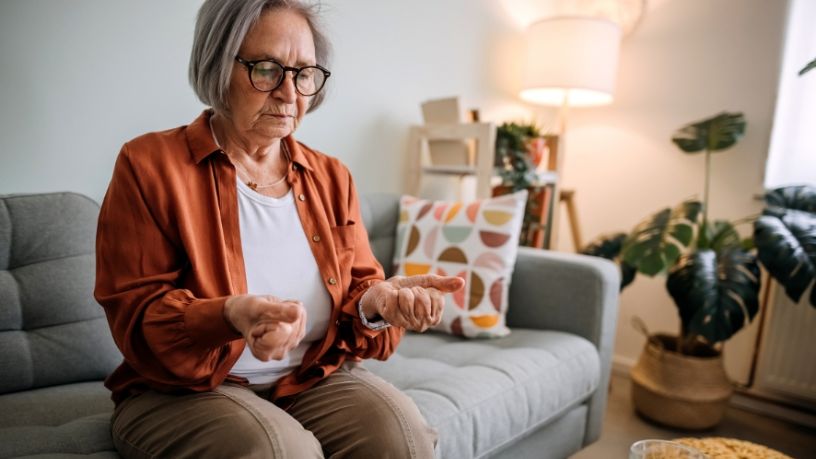
The most common arthritis in Australia, osteoarthritis develops over time and can result in painful joints. Find out how this condition might affect you.
Knee osteoarthritis: The basics
Osteoarthritis is a joint disease that commonly affects the knee, so make sure you know the symptoms, causes and treatments that are available.
Top anti-inflammatory foods to help reduce joint pain
Discover some of the best anti-inflammatory foods to relieve joint pain and arthritis. Learn what to eat to support healthier joints and reduce inflammation.

Rheumatoid arthritis: An overview
Rheumatoid arthritis is a chronic autoimmune condition that can lead to stiff, swollen and inflamed joints. Learn about the symptoms, causes and treatments.